LIVE FROM BLUFF HOUSE · CAYUCOS
Coastal Conditions
Cayucos, California
—
Bluff House Station, Cayucos
WeatherFlow Tempest station at the bluff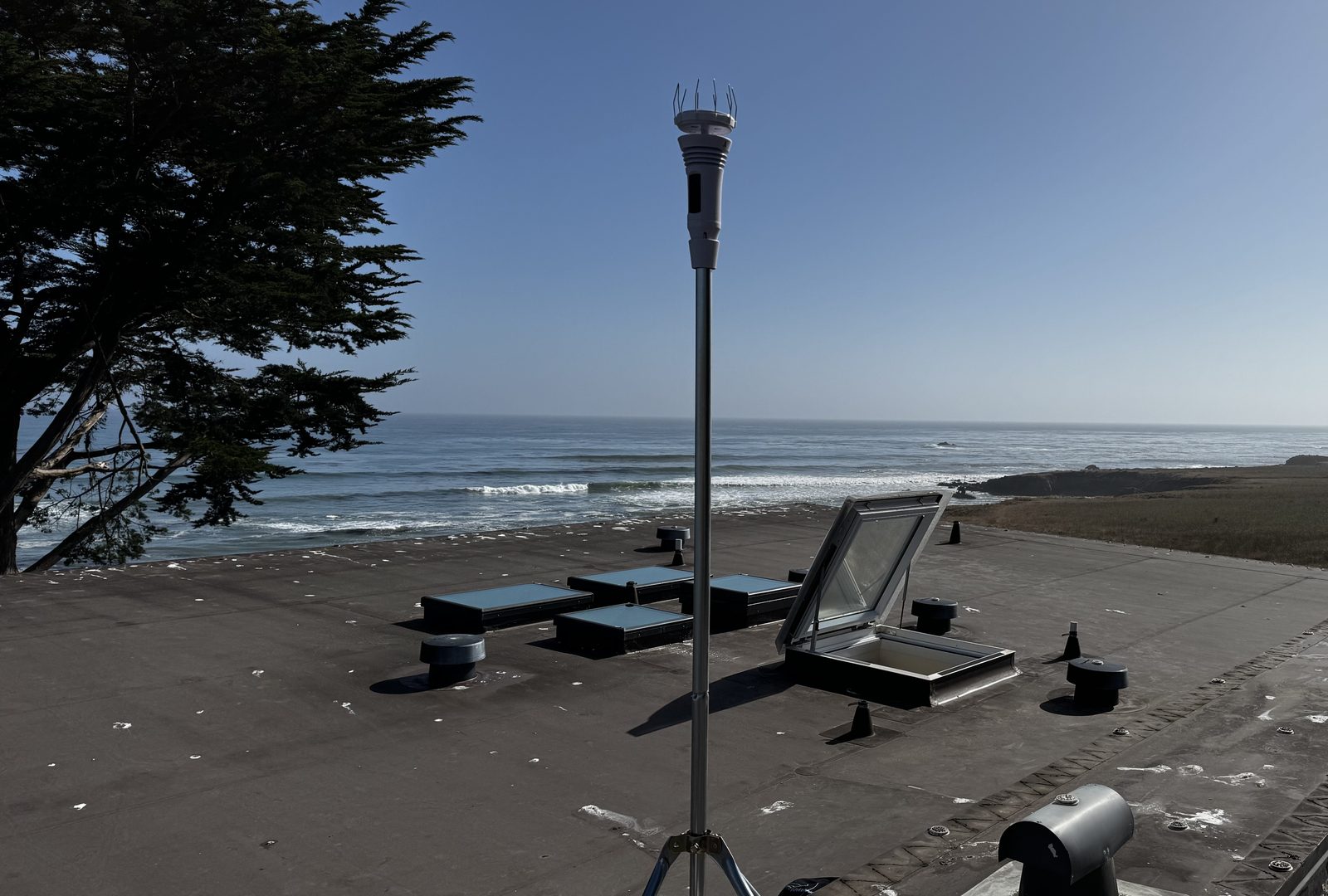
Ocean Conditions
nearshore waves combined with marine windWind works on the water two ways. Out at sea, over hours and miles, it builds the waves shown below; an offshore buoy measures the finished result, so wave size already reflects the wind that made it. Right at the bluff, local wind grooms the surface, smoothing or roughening it without changing the wave size.
Surf Conditions
Tides & Tide Pooling
NOAA predictions, Port San Luis| When | Tide | Height |
|---|---|---|
| — | ||
How today's waves add up
The dark line at the bottom is the sea surface. It is the sum of the swell and the wind chop shown above it. Where the swell crests line up, they stack into a set; the orange line is the energy envelope. Built from the current swell and wind-sea readings, so it changes with conditions.
What makes good tide pooling
Tide pooling means walking the rocky shelf when the ocean pulls back, to find the anemones, sea stars, crabs, urchins and snails that live where the water normally covers. No gear needed — just timing, footing, and care. Here is how to pick a good day.
How low is low enough
Tide height is measured in feet against the average of the lowest daily tides (what tables call MLLW). At Estero Bluffs the rock shelf begins to uncover around +1.5 ft, is well exposed near 0 ft, and on a minus tide below about −1 ft it lies wide open — that is the rare, special kind worth planning around. Much above +1.5 ft and most of the shelf stays underwater, so there is little to explore.
The best season may surprise you
On the California coast the very lowest tides shift between night and day with the season. In late spring and summer the deepest lows fall before dawn or after dark, so the daytime lows are relatively high. The best daytime tide pooling here lands in the cooler months — roughly fall through early spring — when the low tides line up with daylight. A summer visit can still catch a workable daytime low; just don’t expect the wide-open shelf of a winter minus tide. That is why this page rates a low against what is achievable that time of year, not against a fixed number.
It doesn’t have to be sunny
A bright day is pleasant, but not required. Overcast or partly cloudy skies are fine — often better, since less glare on the water lets you see into the pools. What you do want to skip is rain, wind, and rough surf, for comfort and, more importantly, safety.
Stay safe on the rocks
Go near the low tide, about an hour either side. Wear shoes with grip — wet rock and algae are slippery. Watch the incoming tide so you aren’t cut off, and keep an eye seaward for sneaker waves. Never turn your back on the ocean, and keep children within arm’s reach on the wet rock.
Leave it as you found it
Walk on bare rock, not on living things. Look and photograph, but don’t pry animals loose or take them home. A tide pool only stays full of life if everyone leaves it intact.